The Ultimate Guide to Hiring a Digital Marketing Agency for Small Businesses

Digital marketing can feel overwhelming, especially if you’re running a small business and trying to handle everything yourself. But having a strong online presence isn’t optional anymore—it’s a must. That’s why finding the right digital marketing agency for small businesses is so important. This guide will make the process easy to understand and help you pick the best agency to grow your business online. But before choosing an agency, always research their services whether it will meet your goal.
1. Why Digital Marketing is Essential for Small Businesses
In today’s fast-paced, tech-driven world, digital marketing has become an absolute necessity for small businesses. As more consumers turn to online platforms for research and shopping, businesses of all sizes need to embrace digital marketing to remain competitive. Here’s why digital marketing is crucial for small businesses:
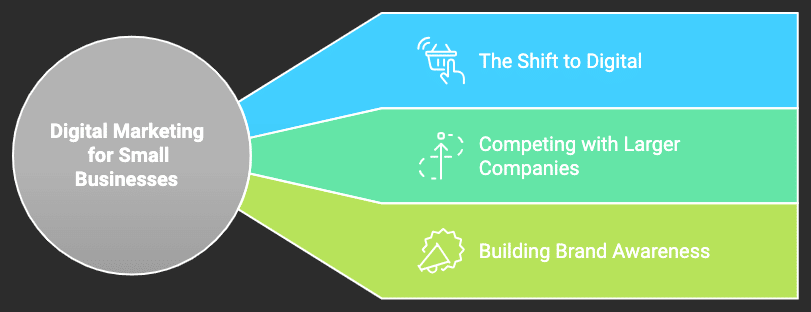
1.1 The Shift to Digital
Consumer behavior has dramatically shifted in recent years, making digital marketing a must for small businesses. Gone are the days when customers would primarily rely on physical stores or word of mouth to find what they need. Today, consumers are online—researching products, comparing prices, and reading reviews from the comfort of their homes or on the go via mobile devices.
Online Research: Studies show that a majority of buying decisions start with online research. Consumers use search engines to find the best products, compare brands, and read customer reviews before making a purchase.
Mobile Usage: With more people accessing the internet via smartphones, mobile-friendly websites and targeted ads are becoming increasingly important. Small businesses that don’t adapt to this shift may miss out on significant opportunities to reach potential customers.
1.2 Competing with Larger Companies
One of the biggest challenges small businesses face is competing against larger, more established companies with bigger budgets and extensive resources. However, digital marketing can help level the playing field, allowing small businesses to compete effectively.
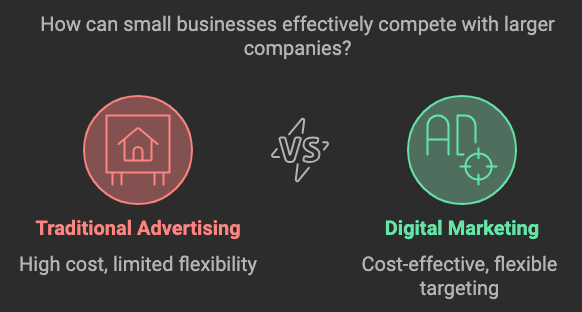
Targeted Advertising: With digital marketing, small businesses can target specific audiences based on location, demographics, interests, and behavior. This allows businesses to reach potential customers directly and efficiently without the need for expensive, broad marketing campaigns.
Cost-Effective Strategies: Traditional advertising methods, such as TV or print ads, can be costly and out of reach for small businesses. Digital marketing offers affordable options, such as social media ads, Google Ads, and email campaigns, that allow small businesses to stretch their marketing budgets and compete with larger competitors.
Flexibility: Unlike traditional advertising, digital marketing is flexible and easily adjustable. Small businesses can tweak their campaigns in real-time based on performance, ensuring that every dollar spent is working hard for them.
Partnering with the right digital marketing agency for small businesses can help you execute these strategies effectively and save time and effort.
1.3 Building Brand Awareness
An online presence is essential for building brand awareness and credibility. In the digital age, consumers expect businesses to have a professional, easily accessible online presence.
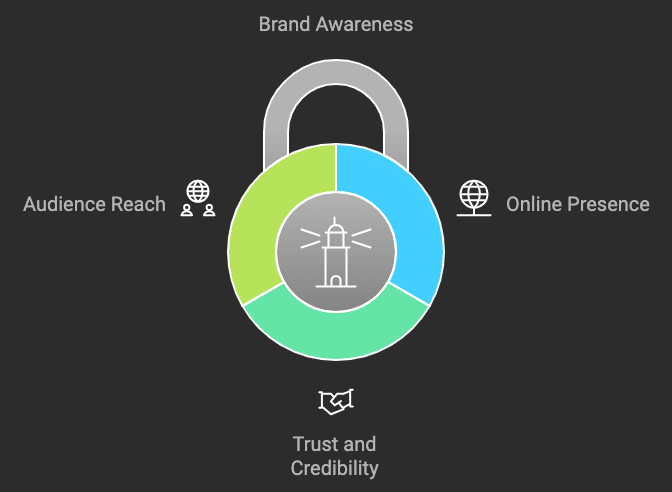
Establishing an Online Presence: Digital marketing helps small businesses get discovered online, whether through social media, search engine optimization (SEO), or paid ads. An optimized website and engaging social media profiles are key to making a strong first impression.
Building Trust and Credibility: Customers are more likely to trust a business that has a solid online presence, with positive reviews, testimonials, and valuable content. By providing helpful, consistent, and authentic content, small businesses can build trust and authority in their industry.
Reaching a Larger Audience: Unlike traditional marketing, digital marketing enables small businesses to reach a global audience. Whether it’s through organic SEO, social media engagement, or paid ads, businesses can reach people outside their immediate geographic area, broadening their customer base and increasing sales potential.
2. Key Benefits of Working with a Digital Marketing Agency
Partnering with a digital marketing agency offers several advantages that can help take your small business to the next level. From specialized expertise to cost savings and time management, agencies bring a wealth of knowledge and resources to the table. Let’s dive into the key benefits of working with a digital marketing agency.
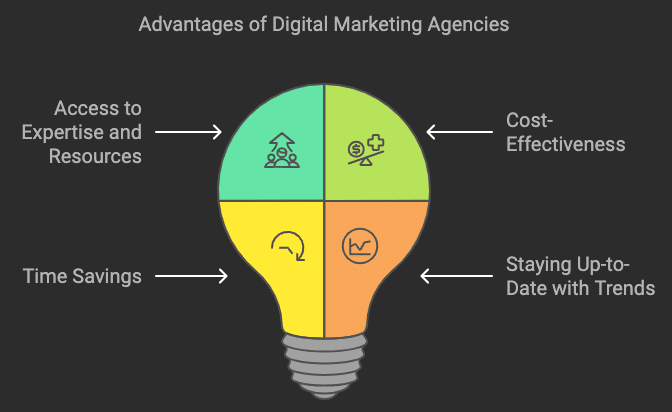
2.1 Access to Expertise and Resources
One of the biggest advantages of working with a digital marketing agency is gaining access to a team of experts. Digital marketing involves a wide range of skills, from SEO (Search Engine Optimization) to content creation, social media strategy, and Google Ads management. Agencies bring a wealth of specialized knowledge in each area, ensuring that your marketing efforts are comprehensive and effective.
- SEO Experts: Agencies employ skilled SEO specialists who optimize your website to rank higher in search engine results, driving organic traffic and increasing visibility.
- Content Creators: They often have experienced writers and designers who can create engaging content—be it blog posts, videos, or infographics—that speaks to your audience.
- Paid Ads Specialists: Experts in Google Ads and other platforms know how to maximize your ad spend, targeting the right audience to generate qualified leads.
- Social Media Managers: Agencies have dedicated social media experts who develop strategies for platforms like Facebook, Instagram, and LinkedIn, helping to build your brand and engage with your audience.
2.2 Cost-Effectiveness
While hiring an agency involves an investment, it can actually be more cost-effective than doing everything in-house. Agencies work with small businesses to deliver measurable results within the allocated budget, helping you avoid the costly trial-and-error approach that often comes with managing digital marketing yourself.
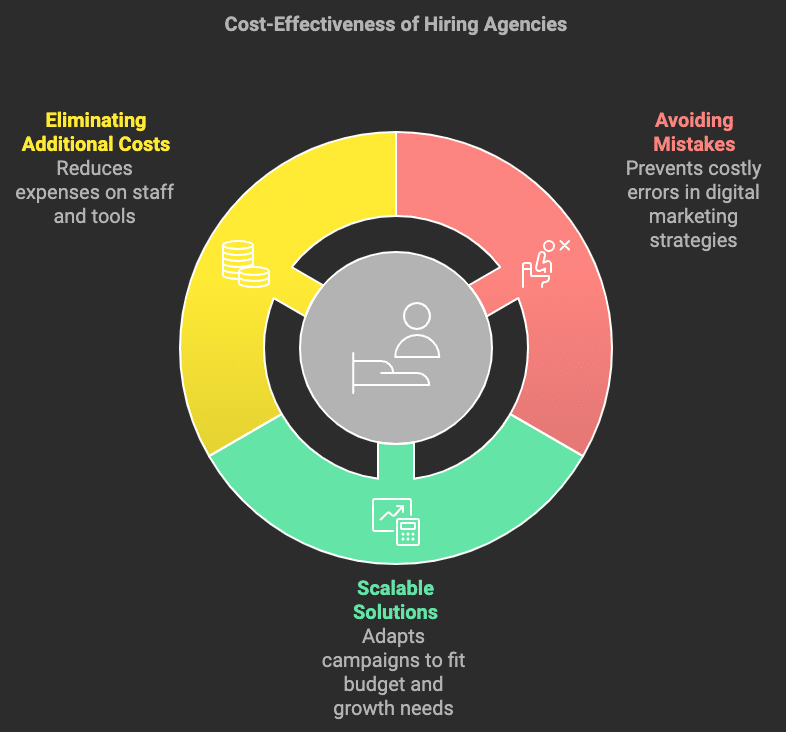
- Avoiding Mistakes: If you lack experience in digital marketing, you may end up wasting money on ineffective strategies. Agencies already know what works and what doesn’t, saving you from unnecessary spending.
- Scalable Solutions: Digital marketing agencies can tailor campaigns to fit your budget and scale them over time, ensuring that you get the most out of your investment.
- Eliminating Additional Costs: When you hire an agency, you avoid the cost of hiring in-house staff, purchasing expensive tools, or investing in ongoing training. Many agencies already have the necessary software and tools to track and manage campaigns effectively.
2.3 Time Savings
Running a small business requires juggling many tasks—customer service, operations, and strategy, to name a few. Digital marketing adds another layer of complexity. By outsourcing marketing tasks to an agency, you free up your time to focus on what you do best.
- Focus on Core Activities: While the agency handles your marketing, you can concentrate on running your business, whether that’s managing your team, improving products, or growing customer relationships.
- Efficiency: Agencies work quickly and efficiently, handling multiple aspects of your digital marketing simultaneously. This means you don’t have to spend time managing each part of your strategy.
2.4 Staying Up-to-Date with Trends
The digital marketing landscape is always evolving, with new trends, tools, and algorithms constantly reshaping the industry. Agencies stay ahead of the curve, keeping your campaigns current and effective.
- Tracking Industry Changes: Agencies monitor changes to search engine algorithms, social media trends, and digital marketing best practices. This ensures that your campaigns adapt to new developments in real-time.
- Implementing New Strategies: Agencies are always exploring new strategies and technologies to boost their clients’ results. Whether it’s integrating AI tools, exploring new social media platforms, or leveraging new SEO tactics, agencies know how to incorporate these innovations into your campaigns.
3. Core Digital Marketing Services Small Businesses Need
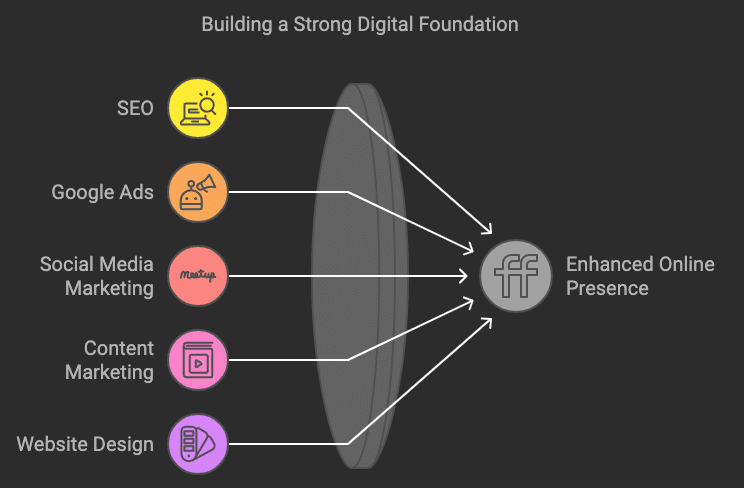
To succeed in the digital world, small businesses need to focus on the essential digital marketing services that help boost visibility, attract customers, and drive sales. Here are five core digital marketing services every small business should consider:
3.1 SEO (Search Engine Optimization)
Search engine optimization (SEO) is critical for improving your business’s visibility on search engines like Google. SEO helps you appear in search results when potential customers are looking for products or services you offer.
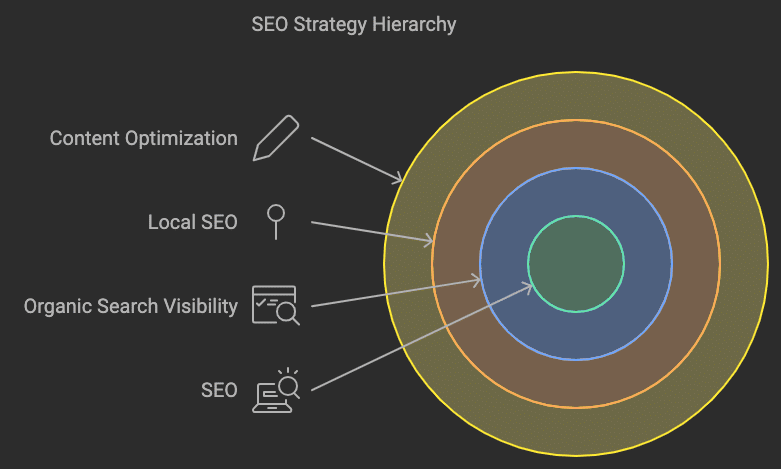
- Organic Search Visibility: SEO helps your business rank higher on search engines, making it easier for people to find you. Ranking in the top results increases the chances of attracting organic traffic, which means more visitors without paying for ads.
- Local SEO: For small businesses targeting a local market, local SEO is essential. By optimizing your Google My Business profile and targeting local keywords, you can improve your chances of appearing in local searches and attracting nearby customers.
- Content Optimization: Effective SEO requires optimizing your content for both search engines and your audience. This includes using relevant keywords, creating high-quality, informative content, and ensuring your website is user-friendly.
3.2 Google Ads (Pay-Per-Click)
Google Ads, or pay-per-click (PPC) advertising, is a powerful tool for driving immediate traffic to your website and supporting lead-generation efforts.
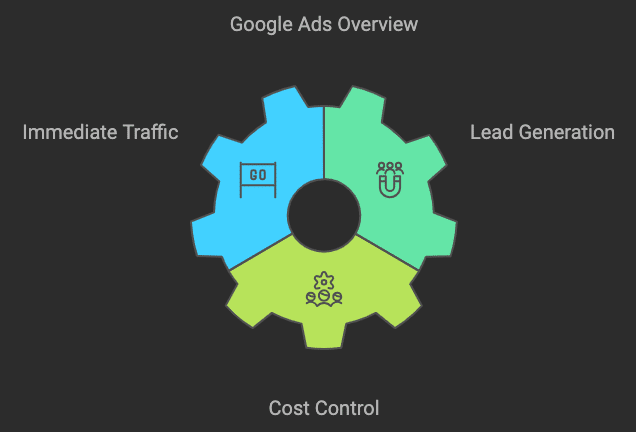
- Immediate Traffic: Unlike SEO, which takes time to show results, Google Ads delivers instant traffic to your site. By bidding on relevant keywords, your business can appear at the top of search results and drive targeted visitors right away.
- Lead Generation: Google Ads allows small businesses to create highly targeted ads based on customer search intent. By targeting specific keywords, locations, and demographics, businesses can attract customers who are actively looking for their products or services.
- Cost Control: Google Ads operates on a pay-per-click model, meaning you only pay when someone clicks on your ad. This makes it a cost-effective way for small businesses to reach a wide audience while controlling their marketing spend.
3.3 Social Media Marketing and Ads
Social media marketing plays a key role in building brand awareness, engaging with customers, and driving sales.
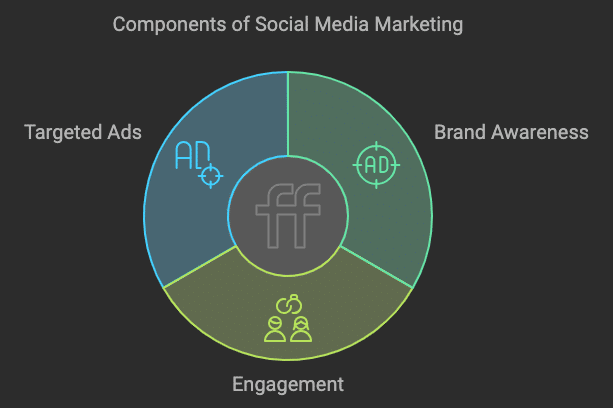
- Brand Awareness: Social media platforms like Facebook, Instagram, and LinkedIn allow businesses to reach a large audience, build a community, and increase brand visibility. Consistent posts, engaging content, and interactions with followers help establish your business as a trusted authority in your industry.
- Engagement: Social media is one of the best ways to engage directly with your customers. Responding to comments, sharing valuable content, and running interactive campaigns (like polls or giveaways) can boost customer loyalty and trust.
- Targeted Ads: Social media platforms offer powerful targeting tools, allowing businesses to serve ads to specific audiences based on their interests, behaviors, demographics, and even past interactions with your brand. This targeted approach ensures your ads reach the people most likely to convert.
3.4 Content Marketing
Content marketing is a long-term strategy that helps establish your business as an authority in your industry while supporting SEO efforts.
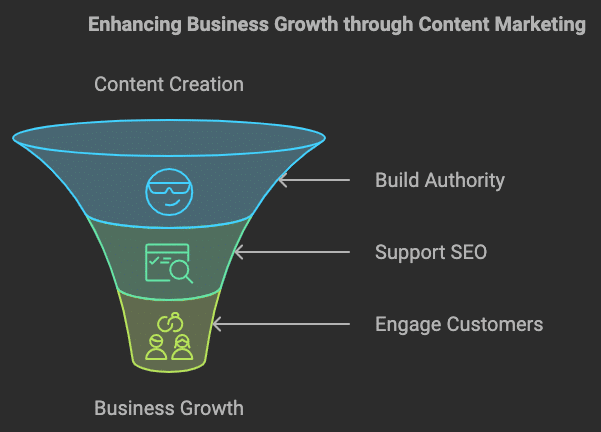
- Building Authority: By creating high-quality, valuable content, such as blog posts, videos, or infographics, small businesses can demonstrate their expertise and build trust with potential customers.
- SEO Support: Content marketing is a critical component of SEO. Search engines love fresh, relevant content. By regularly publishing optimized content, small businesses can improve their rankings and attract more organic traffic.
- Customer Engagement: Content marketing also helps keep your audience engaged by offering helpful, informative, or entertaining material that resonates with their needs. This keeps your brand top of mind and nurtures customer relationships.
3.5 Website Design and Development
A well-designed, functional website is crucial for converting visitors into customers.
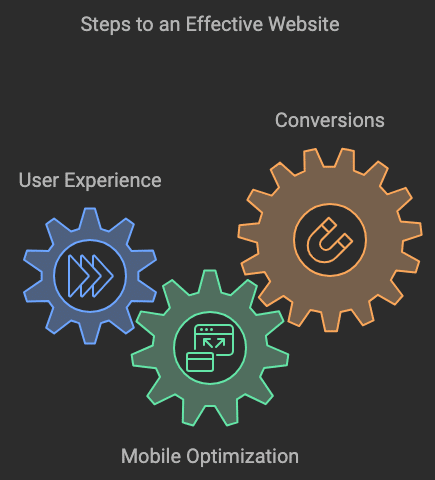
- User Experience (UX): The design of your website should provide a seamless, user-friendly experience. Visitors should be able to easily navigate your site, find what they’re looking for, and take desired actions like making a purchase or filling out a contact form.
- Mobile Optimization: With more people browsing the internet on their mobile devices, having a mobile-optimized website is no longer optional. Your website must look and function well on smartphones and tablets to ensure you don’t lose potential customers.
- Conversions: Your website is the foundation of your online presence, and it should be built with conversion in mind. This means clear calls to action, easy-to-find product information, and fast loading times. An optimized website encourages visitors to take the next step, whether it’s signing up for a newsletter, requesting a quote, or making a purchase.
WordPress plugins improve user experience by enhancing site navigation, speeding up load times, and ensuring mobile responsiveness. Plugins like Variation Swatches for WooCommerce enhance your store’s visibility by providing customers with a more interactive and visually appealing way to select product variations. This leads to better engagement, improved user experience, and can significantly increase sales by making the shopping process easier and more intuitive.
4. DIY vs. Hiring a Digital Marketing Agency
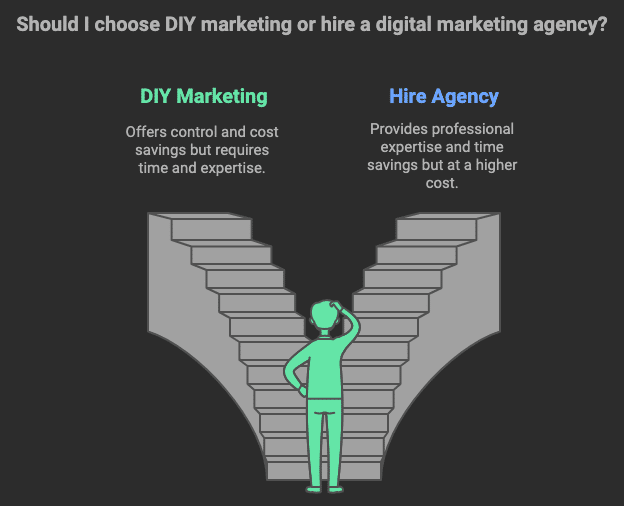
When it comes to digital marketing, small businesses often face a tough decision: should they try to handle it themselves (DIY) or hire a professional digital marketing agency for small businesses? Both options have their advantages and drawbacks, and understanding when to choose each approach can significantly impact your business’s success.
4.1 Pros and Cons of DIY Marketing
Pros of DIY Marketing:
- Cost Savings: One of the biggest benefits of handling your marketing yourself is the potential cost savings. You won’t have to pay an agency’s fees, which can be a big advantage if you’re on a tight budget.
- Full Control: When you manage your marketing, you have full control over your campaigns. You can adjust strategies quickly based on real-time results, and you have a direct hand in all decisions.
Cons of DIY Marketing:
- Time-Consuming: Digital marketing involves a lot of moving parts, including creating content, managing social media, optimizing SEO, running ads, and more. For small business owners who are already wearing many hats, this can be overwhelming and time-consuming.
- Lack of Expertise: While you may have a general understanding of digital marketing, it’s challenging to stay on top of every trend, tool, and best practice. Without a deep understanding of each channel (SEO, PPC, content, etc.), it’s easy to make mistakes that could hurt your business in the long run.
- Inefficiency: DIY marketing often leads to inefficient use of resources. You might try multiple strategies without knowing which ones work best for your specific business, leading to wasted time and money.
While DIY marketing can be tempting for its low cost and flexibility, it comes with challenges that can hinder your business growth if not executed properly.
4.2 When to Consider an Agency
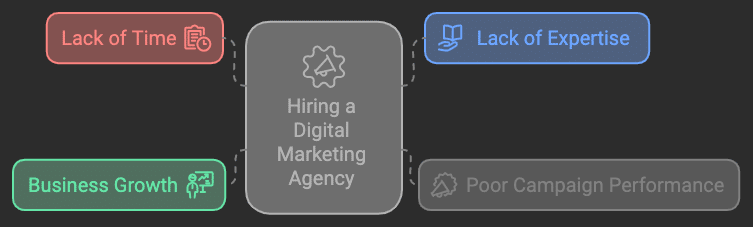
Hiring a digital marketing agency for small businesses can be a game-changer for your business, but when do you know it’s the right time? Here are a few key signs that it may be time to consider working with an agency:
- You Lack Time: As a small business owner, your time is valuable, and managing your marketing efforts can take away from focusing on core business operations like product development, customer service, or sales. If you’re struggling to balance your marketing with other responsibilities, an agency can help take the load off.
- You Lack Expertise: Digital marketing is a complex field that requires specialized knowledge in areas like SEO, PPC, social media, and content creation. If you’re not seeing results from your DIY efforts or you don’t have the necessary skills, hiring an agency with expertise in these areas can drive better outcomes.
- Your Campaigns Aren’t Performing: If you’ve been running marketing campaigns and aren’t seeing the desired results, it could be due to a lack of strategic planning or optimization. A digital marketing agency for small businesses can analyze your current efforts and make data-driven recommendations to improve performance.
- Your Business is Growing: As your business expands, your marketing needs become more complex. An agency can help you scale your efforts efficiently, ensure your strategies evolve with your growth, and bring in the resources needed to manage larger campaigns.
If any of these points sound familiar, it may be time to consider bringing in a professional digital marketing agency for small businesses to help you reach your business goals more effectively.
4.3 Finding the Right Fit
Choosing the right digital marketing agency for small businesses is crucial to ensure a productive and successful partnership. Here are some tips to help you find the right agency for your business:
- Assess Your Needs: Before you start searching for an agency, make sure you understand what your business needs. Are you looking for help with SEO, content marketing, social media, or a combination of services? Make sure the agency you choose has expertise in the areas that matter most to your business.
- Look for Industry Experience: An agency with experience in your industry will better understand your target audience, competition, and market trends. This can help them create more effective and tailored strategies for your business.
- Review Case Studies and Testimonials: Look for agencies that have a proven track record. Review case studies and testimonials to understand how they’ve helped other businesses succeed. This can give you confidence in their ability to deliver results.
- Evaluate Their Communication and Approach: Communication is key to a successful partnership. During the interview process, assess how well the agency listens to your needs and how clearly they communicate their strategies. A good agency will work collaboratively with you and keep you informed throughout the process.
- Consider Cultural Fit: Finally, ensure that the agency’s values and culture align with your business. A strong cultural fit fosters trust, collaboration, and long-term success.
5. How to Choose the Right Digital Marketing Agency for Your Small Business
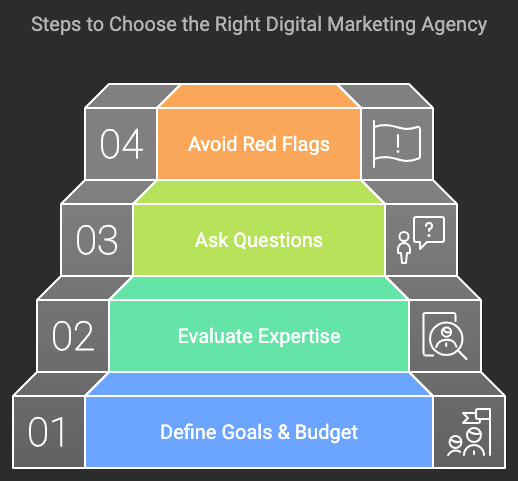
Choosing the right digital marketing agency for your small business can be a game-changing decision. With the right partner, you can boost your online presence, drive more leads, and ultimately grow your business. But with so many agencies to choose from, how do you pick the one that’s best suited for your needs? In this section, we’ll break down the steps to help you find the right fit.
5.1 Define Your Goals and Budget
Before you even begin looking for a digital marketing agency, it’s crucial to define your goals and set a realistic budget. Here’s how you can approach both:
Setting Goals:
Take a moment to reflect on what you want to achieve through digital marketing. Whether you’re focused on increasing brand awareness, driving traffic to your website, generating leads, or boosting sales, your goals will guide the agency’s strategy. The more specific you can be, the better. For example, instead of simply saying, “I want more customers,” try something like, “I want to increase my monthly website traffic by 20% in the next 6 months.” Having clear goals will help you and your agency stay on track.
Setting Your Budget:
Understanding your budget is key to finding an agency that fits your financial constraints. While digital marketing can provide a great return on investment, it’s important to know how much you’re willing to spend upfront. Keep in mind that quality services come at a cost, so you should avoid agencies that promise rock-bottom prices. Instead, focus on finding a partner that offers value and aligns with your business’s marketing goals.
5.2 Evaluating Agency Expertise and Experience
Once you have a clear idea of your goals and budget, it’s time to start evaluating agencies. A good place to begin is by assessing their expertise and experience:
Look at Their Past Work:
A reputable agency should have a portfolio that showcases their previous work. Review case studies or examples of campaigns they’ve run for other small businesses. If they’ve achieved results in areas relevant to your business (such as SEO, Google Ads, or social media marketing), it’s a good sign that they can deliver similar results for you.
Client Testimonials and Reviews:
Take a look at what other clients have to say about working with the agency. Client testimonials and online reviews can give you insight into how the agency operates, their communication style, and their ability to meet deadlines. Don’t hesitate to ask for references from past clients to get a more in-depth perspective on the agency’s performance.
Industry Specialization:
Consider whether the agency specializes in your industry or business type. While many agencies work across various industries, an agency with experience in your niche will better understand your challenges, target audience, and industry-specific tactics. They’ll be able to create more tailored strategies for your business, leading to better results.
5.3 Questions to Ask a Potential Agency
When interviewing potential agencies, it’s important to ask the right questions. These questions will help you understand the agency’s approach, expertise, and how they measure success. Here are a few to get you started:
- What’s your approach to ROI (Return on Investment)?
Understanding how the agency plans to measure success is key. Do they track and report on KPIs (Key Performance Indicators)? Are they focused on metrics that matter to your business, like lead generation, sales, or customer engagement? - How will you measure success?
Ask for specific examples of how they have measured success in the past. Will they provide regular performance reports? How often will you receive updates? This will ensure that your business is always on the right track. - What are your processes for SEO and Google Ads management?
If SEO or paid ads are part of your marketing strategy, it’s essential to understand their process for managing these channels. Do they focus on long-term growth, or are they more focused on short-term tactics? - How will you stay on top of trends and updates in the industry?
The digital marketing landscape changes quickly, with frequent algorithm updates, new tools, and emerging strategies. Find out how the agency keeps up with industry changes to ensure your campaigns stay relevant and effective. - What kind of communication can I expect?
Clear communication is essential for a successful partnership. Ask how often you’ll be in touch and who will be your main point of contact. A good agency will be transparent and proactive with updates, making sure you’re always in the loop.
5.4 Avoiding Red Flags
While most agencies are reputable, there are some red flags that should raise concerns when making your decision. Here are a few to watch out for:
- Promises of Guaranteed Rankings:
No legitimate agency can guarantee specific rankings on search engines like Google. SEO is a long-term strategy that depends on various factors. Be cautious of agencies that promise immediate results or guarantee page-one rankings, as this could indicate unethical practices, like using black-hat SEO techniques. - Lack of Transparency:
If an agency is unwilling to share their strategies, reporting processes, or the tools they use, that’s a major red flag. A reputable agency will be open and transparent about how they plan to help your business. - Too Low Prices:
If an agency offers digital marketing services at an unusually low price, it could indicate that they cut corners, use outdated methods, or don’t have the expertise to deliver quality results. Be wary of agencies that seem too good to be true. - Overpromising Results:
Agencies that make unrealistic promises or use buzzwords like “overnight success” or “instant traffic” are often more focused on making a sale than helping your business grow. Be cautious of agencies that don’t provide clear, data-driven strategies.
6. Case Study: How We Helped a Small Business Achieve [Goal] Through Digital Marketing
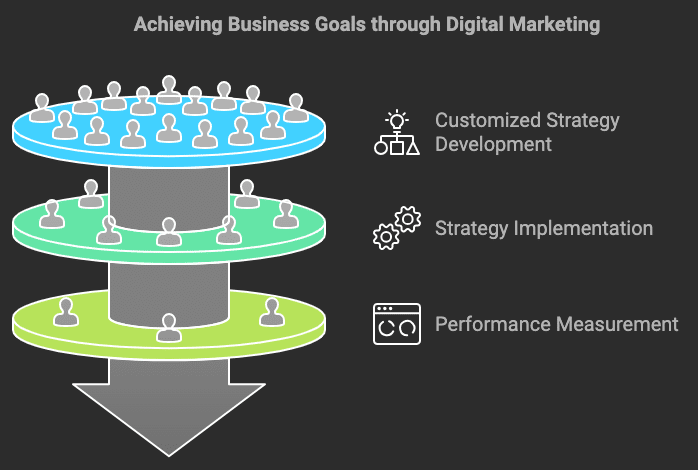
At SERPTALE, we understand that every business, especially small businesses, has unique challenges when it comes to digital marketing. Our goal is always to provide customized strategies that align with our clients’ objectives and deliver measurable results. In this case study, we’ll walk you through an example of how we helped a small business achieve its goal through a tailored digital marketing strategy.
Client’s Challenges
Our client, a small e-commerce business in the home decor niche, came to us with several pain points. Despite having a high-quality product and a user-friendly website, they were struggling to gain visibility in a highly competitive market. The main challenges they faced included:
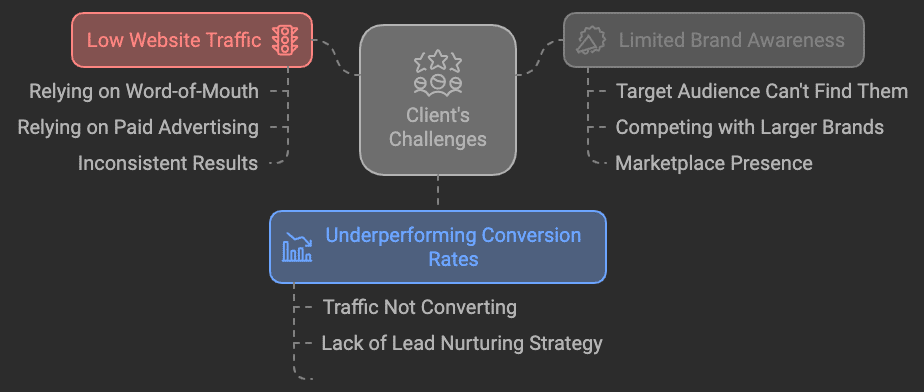
- Low Website Traffic: The website was not attracting enough organic traffic. The client was relying heavily on word-of-mouth and paid advertising, but these efforts weren’t yielding consistent results.
- Limited Brand Awareness: Despite offering great products, the client’s brand wasn’t well-known in the marketplace. Their target audience couldn’t easily find them online, and they were failing to compete with larger, more established brands.
- Underperforming Conversion Rates: While they were getting some traffic, the website wasn’t converting visitors into customers. The business lacked a clear strategy to nurture leads and turn them into sales.
Our Agency’s Approach and Strategies
We knew that addressing these challenges required a multi-faceted approach, combining several core digital marketing services. Here’s how we tackled the situation:
1. SEO (Search Engine Optimization):
To boost the client’s organic visibility, we began with a comprehensive SEO audit of their website. The audit revealed several areas for improvement:
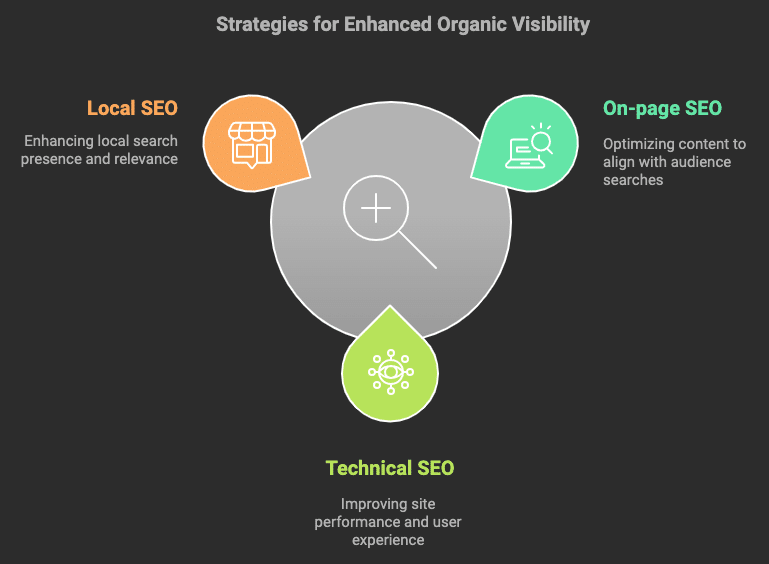
- On-page SEO: We optimized the site’s content, improving keyword usage, meta descriptions, and headings to better align with what their target audience was searching for.
- Technical SEO: We improved the site’s load speed, fixed broken links, and enhanced mobile compatibility, ensuring a smooth user experience.
- Local SEO: Since the client offered both online and in-store purchases, we implemented local SEO strategies to help them rank higher for local search terms, including creating and optimizing their Google My Business profile.
2. Content Marketing:
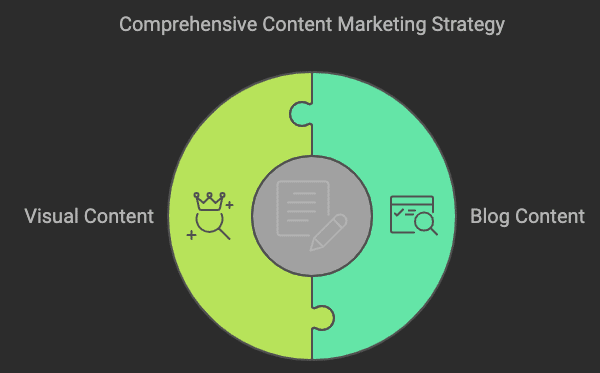
We worked with the client to develop an engaging content marketing strategy. This involved:
- Blog Content: Writing SEO-optimized blog posts that not only targeted relevant keywords but also addressed common questions and pain points of the target audience (e.g., “How to Decorate a Small Apartment on a Budget”).
- Visual Content: We created high-quality product videos, tutorials, and infographics that showcased the products in use, building trust and authority within the niche.
3. Social Media Marketing:
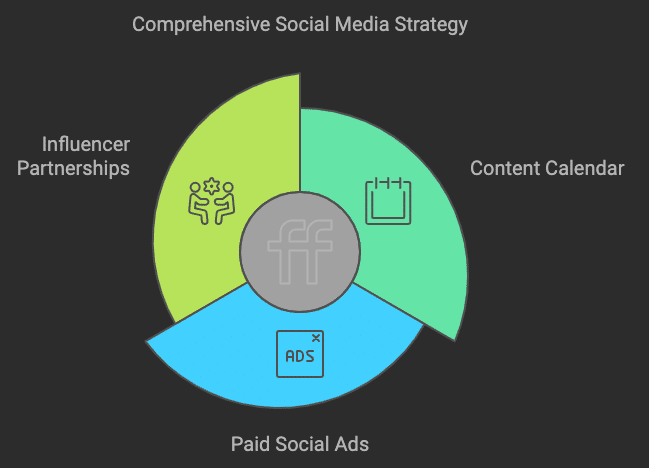
To increase brand awareness and engage with the target audience, we created a social media strategy across platforms like Instagram, Facebook, and Pinterest—where the home decor audience is most active:
- Content Calendar: We developed a consistent posting schedule featuring product showcases, customer testimonials, and behind-the-scenes content.
- Paid Social Ads: We also ran paid ad campaigns, particularly on Facebook and Instagram, targeting users who had shown interest in similar products and services.
- Influencer Partnerships: We partnered with micro-influencers in the home decor space to help boost brand credibility and widen the client’s reach.
4. Conversion Rate Optimization (CRO):
Understanding that driving traffic was only part of the equation, we focused on improving conversion rates:
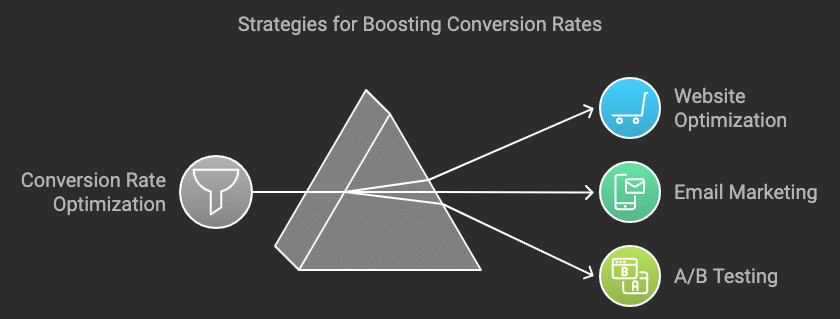
- Website Optimization: We made user experience (UX) improvements on the website, simplifying the checkout process and enhancing the call-to-action (CTA) buttons to make it easier for visitors to make a purchase.
- Email Marketing: We implemented an email marketing campaign to nurture leads with personalized offers and follow-ups, helping move prospects down the sales funnel.
- A/B Testing: We ran A/B tests on various landing pages and product pages to determine which designs and messaging worked best at converting visitors into customers.
Measurable Results Achieved
After implementing our tailored digital marketing strategy, we saw impressive, measurable results within a few months. Here’s a breakdown of what we achieved:
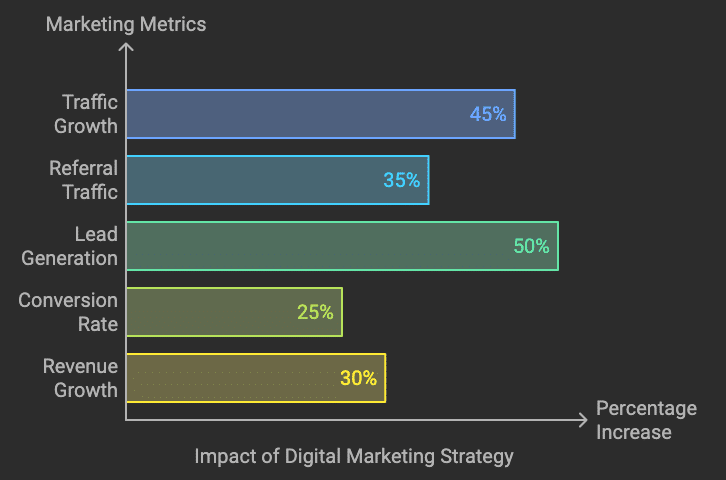
- Traffic Growth:
- Organic search traffic increased by 45% over the first three months of the campaign, thanks to the SEO improvements and content marketing efforts.
- Referral traffic from social media grew by 35% as a result of the influencer partnerships and paid ads.
- Lead Generation:
- Our lead generation efforts resulted in a 50% increase in email sign-ups. The targeted social media ads and content marketing attracted a highly relevant audience, significantly boosting the client’s email list.
- Conversion Rate Improvement:
- By improving website design and implementing conversion optimization strategies, the client saw a 25% increase in conversions. The more streamlined user experience and compelling content played a significant role in nurturing visitors through the sales process.
- Revenue Growth:
- Ultimately, these efforts translated into a 30% increase in sales over the same period. By addressing the full marketing funnel, from attracting traffic to converting visitors, we helped the client grow their revenue significantly.
Conclusion
In this guide, we’ve covered the essential aspects of working with a digital marketing agency to help your small business grow. From defining your goals and budget to understanding the key services you need, we’ve explored how a tailored digital marketing strategy can make a significant impact on your business’s success.
Remember, working with the right agency—like SERPTALE—can provide you with the expertise and resources needed to improve your online visibility, generate more leads, and increase conversions. By allowing a trusted agency to handle your digital marketing efforts, you can focus on running your business while reaping the benefits of increased brand awareness and improved ROI.
If you’re ready to take the next step in your digital marketing journey, don’t hesitate to reach out for a consultation. Let us help you develop a personalized strategy that will accelerate your business growth and ensure lasting success in the digital world.
FAQs
What should I look for in a digital marketing agency?
Look for experience, client testimonials, a diverse portfolio, and alignment with your business values.
How long does it typically take to see results from digital marketing?
Results can vary, but many businesses start to see changes in a few months depending on the strategies implemented.
Can I handle digital marketing myself instead of hiring an agency?
While manageable, handling it yourself often requires expertise and time that small business owners may not have.
What are common pitfalls when selecting a digital marketing agency?
Common pitfalls include failing to clarify needs, neglecting to check references, and not understanding contracts fully.
How do I know if my digital marketing strategy is working?
Regular analytics reviews, feedback sessions, and performance tracking are key to evaluating effectiveness.